A social platform for research, education & ideas
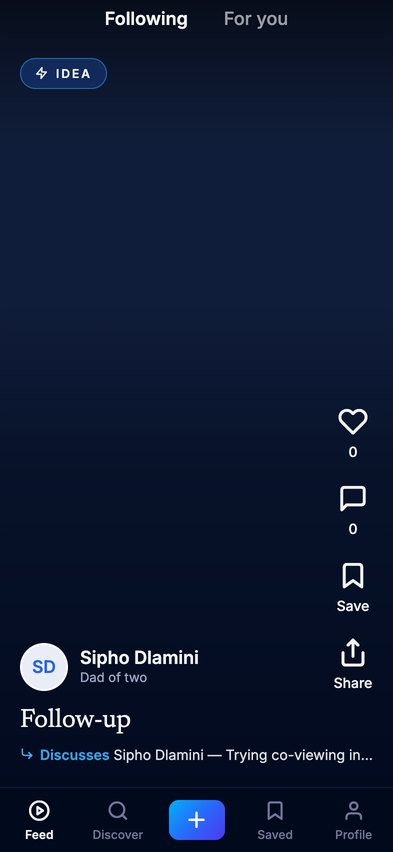
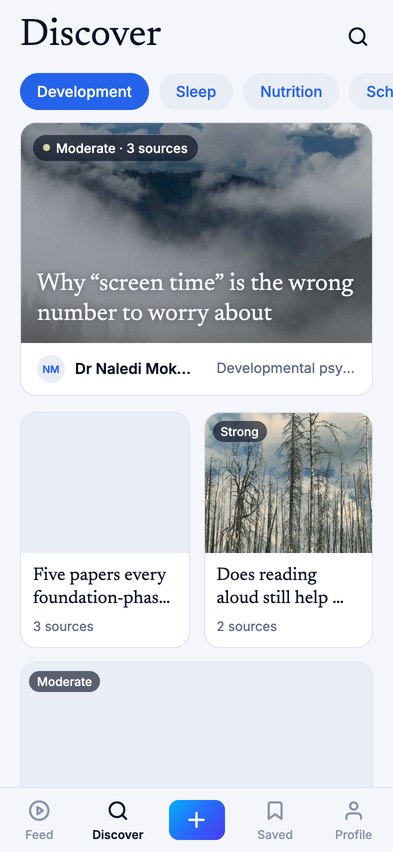
Watch an idea in ninety seconds. Then tap through to the evidence: the claim, the sources, what the research actually found — and what it doesn’t say.

The idea
Research is trapped in journals. Social media spreads claims fast and strips the context. Cit.ED puts the two back together: a feed that feels like the apps you already use, with the research layer built in — not bolted on.
The research layer
Under a post: the claim, the evidence type, the sources, what the research found, its limitations, and what nobody knows yet. Written by the creator, never by an algorithm.
Paste a DOI, a link or a title and the paper is resolved from the open research index. Every source page shows who else on Cit.ED has cited it.
Labels like strong, moderate or mixed come from the sources and the person who read them. We never present an AI score as scientific truth.
Every post is labelled
Personal experience is never presented as scientific evidence just because it appears on the platform.
Cite
When you build on someone’s work, you cite it — and say how. Your profile leads with what that adds up to: how often your ideas are cited and discussed, not how many people clicked Follow.
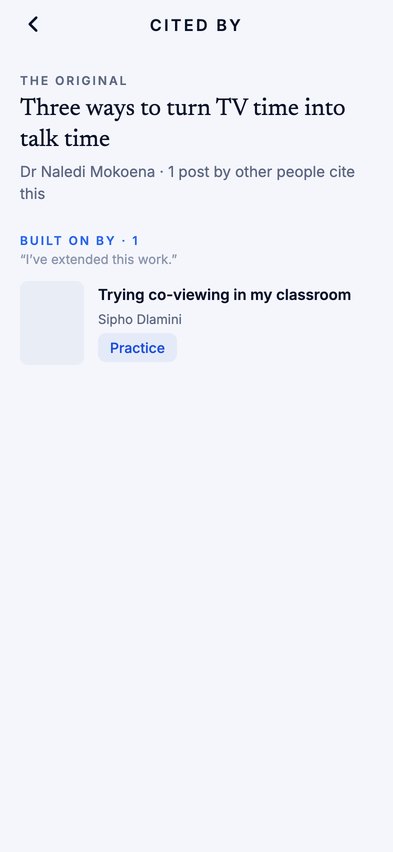
A citing post shows where the idea came from, with a link back to the original.
The original shows every post that built on it, disagreed with it, or took it somewhere new — grouped by how.
Citing yourself never counts. A post that contrasts with yours still counts as a citation. Watching a video is not a citation.
Podcasts & AI
Paste your show’s link — Apple Podcasts, Spotify, your website, or its name — and your episodes appear on your profile and in the feed. Audio streams from your own host, so your download numbers don’t change.
Attach claims and sources to an episode. It gets an Evidence Card, a discussion, and it can be cited — the same as any video.
Research Translator turns a paper into a 30-second summary, or a parent, teacher, student or critical-reading version. Ask the Paper answers only from the paper itself, with quotes. Claim Check flags “research proves…” and suggests evidence-aligned wording — and the creator decides. Every answer cites its sources.
Who it’s for
Reach beyond the journal. Explain your findings in a minute, attach the paper, and watch how the idea is used — cited, discussed, applied.
You don’t have time to read the paper. Read the card. Then, if it matters to your classroom or your kitchen table, open the paper.
Learn to find, evaluate and use evidence by doing it: follow a research question through the sources, the reviews and the contrasting findings.
What success does not mean
Cit.ED Plus
Beta
Cit.ED is in closed beta on iPhone and Android. If you want in — especially if you have research to share or a classroom to test it in — write to us.
